

Introduction
Cycling is a popular way to travel, exercise, and explore California’s cities and scenic routes. However, understanding bicycle safety regulations is essential before heading out, especially when riding during the evening or early morning. One common question among cyclists is, do you need a light on bike in california? The answer depends primarily on whether you are riding in darkness.
California law requires specific lighting and reflective equipment for bicycles operated during darkness on public roads, permitted sidewalks, and bikeways. These requirements help cyclists remain visible to motorists and other road users. Understanding the rules can help you avoid equipment violations and make every ride safer.
California Bicycle Light Laws
If you are wondering, do you need a light on bike in california, the state’s Vehicle Code provides a clear answer for nighttime riding. Under California Vehicle Code Section 21201, bicycles operated during darkness must have a qualifying white front lamp.
The front light must illuminate the path ahead and remain visible from at least 300 feet in front of and from the sides of the bicycle. The law also allows a qualifying white lamp attached to the rider to substitute for the required bicycle-mounted front lamp, provided it meets the visibility requirements.
A bicycle must also have the required rear reflector or an eligible red light with a built-in reflector. Additional pedal and side reflectors are required unless an applicable exception, such as the provision for reflectorized tires, applies.
What Lights and Reflectors Are Required?
Before riding after sunset, check that your bicycle has the following equipment.
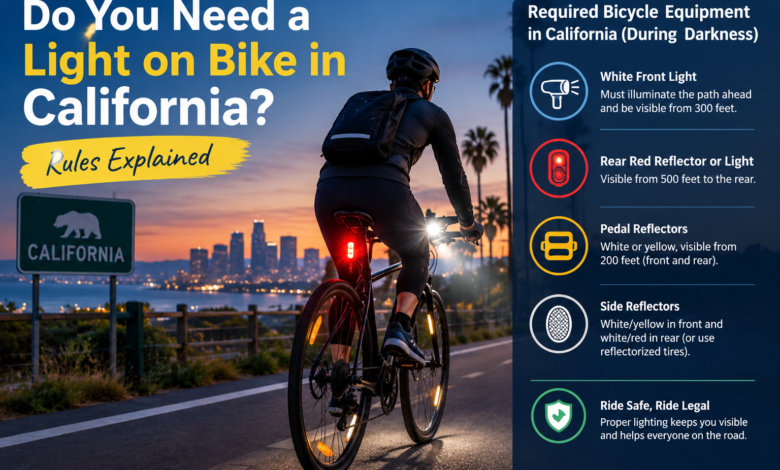
- White front light: It must illuminate the road ahead and be visible from 300 feet in front and from the sides.
- Rear red reflector or qualifying red light: The rear reflector, or a solid or flashing red light with a built-in reflector, must be visible from 500 feet to the rear under the conditions specified by law.
- Pedal reflectors: White or yellow reflectors must be fitted to each pedal, or the required reflectors can be placed on the rider’s shoes or ankles. They must be visible from 200 feet from the front and rear.
- Side reflectors: White or yellow reflectors are required on each side toward the front, and white or red reflectors on each side toward the rear. Reflectorized tires on both the front and rear can replace these side reflectors under the law.
These requirements are designed to make cyclists more visible from several directions, not just to drivers approaching from behind.
When Must You Use a Bicycle Light?
The question do you need a light on bike in california becomes particularly important when planning rides around sunset, sunrise, or poor visibility.
California’s bicycle equipment law applies during darkness. Therefore, cyclists should prepare their lighting equipment before leaving home if their ride might continue after daylight fades. Streetlights do not eliminate the requirement for compliant bicycle lighting.
Even during daytime, using a front light can improve visibility in shaded areas, tunnels, and busy traffic. A rear red light can also help motorists notice cyclists approaching intersections or traveling along roads with limited separation from vehicles.
Although additional lighting may improve safety, extra lights should not replace equipment specifically required by California law.
Choosing the Right Bicycle Light
When shopping for bicycle lights, consider where and how you usually ride. A cyclist traveling through well-lit urban streets may have different needs from someone using rural roads without streetlights.
For city commuting, choose a dependable white front light with sufficient visibility and a secure mounting system. Riders using unlit roads should consider a brighter light designed to illuminate road surfaces, obstacles, and potential hazards.
Look for rechargeable batteries, weather resistance, and mounting hardware that keeps the light securely positioned. Check the battery before each trip, particularly during winter when daylight hours are shorter.
If you are researching do you need a light on bike in california because you are purchasing a new bicycle, remember that a light’s advertised brightness alone does not prove legal compliance. Confirm that the equipment meets the applicable visibility requirements.
Electric Bikes and Nighttime Riding
Electric bicycles also need appropriate lighting and reflective equipment. California law specifically requires electric bicycles to comply with the rear reflector or qualifying red-light requirement at all times, not only during darkness. Nighttime requirements for the front lamp and other reflectors also apply.
Riders should check their e-bike manufacturer’s instructions before adding lights or modifying the electrical system. Battery-powered accessories should be installed securely and used according to the manufacturer’s guidance.
Tips for Safer Nighttime Cycling
Following the law is only one part of staying safe. Wear bright or reflective clothing, keep your bicycle’s brakes in good condition, and make sure your lights are clean and working correctly.
Ride in the same direction as traffic, obey traffic signals, and use appropriate hand signals before turning. Avoid sudden movements and stay alert for parked vehicles, opening car doors, potholes, and pedestrians.
So, do you need a light on bike in california for every daytime ride? The specific lighting requirement discussed here applies during darkness, but using lights whenever visibility is poor is a sensible safety practice.
Conclusion
California requires bicycles operated during darkness to have a qualifying white front lamp, appropriate rear red reflector or light, pedal or shoe reflectors, and the required side reflectors or qualifying reflectorized tires.
Understanding do you need a light on bike in california helps cyclists prepare for nighttime journeys and make informed equipment choices. Before riding, check your lights, confirm your reflectors meet legal requirements, and review the latest guidance from the California DMV. A properly equipped bicycle can help improve visibility and make sharing the road safer for everyone.
