

Introduction
Augmented reality (AR) is transforming how people interact with digital content in the real world. From interactive shopping experiences to immersive marketing campaigns, AR allows businesses to create engaging digital experiences without relying entirely on traditional applications. The topic of meta acquisition 8th wall ar technology has attracted attention because it connects major developments in augmented reality, web development, and immersive digital experiences.
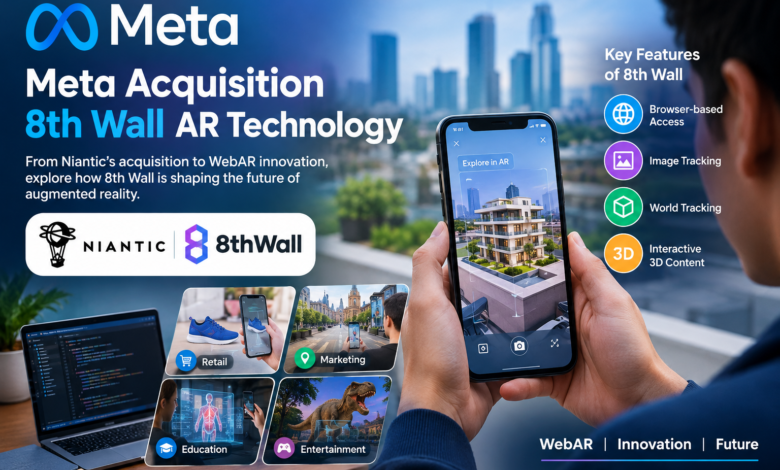
However, an important distinction needs to be understood: Niantic, not Meta, acquired 8th Wall in March 2022. This acquisition helped strengthen Niantic’s augmented reality development ecosystem and expand opportunities for browser-based AR experiences. Understanding this history provides a clearer picture of how the technology evolved and what developers can do with it today.
Understanding 8th Wall and Its AR Technology
8th Wall is a development platform designed to make web-based augmented reality accessible through compatible web browsers. Traditionally, many AR experiences required users to download a dedicated mobile application. WebAR provides an alternative by allowing users to access interactive content through a website or link.
The technology associated with meta acquisition 8th wall ar technology includes browser-based AR development, computer vision, image tracking, and interactive three-dimensional content. These capabilities allow digital objects to appear within a user’s physical surroundings when supported by the device and experience.
Developers can use technologies such as JavaScript and WebGL alongside 3D frameworks to build experiences that combine digital content with real-world environments.
The Acquisition and Its Industry Significance
In March 2022, Niantic announced its acquisition of 8th Wall. Niantic was already known for location-based augmented reality experiences, particularly Pokémon GO. Bringing 8th Wall into its ecosystem created opportunities to expand AR development beyond traditional mobile applications.
The acquisition was significant because it connected browser-based AR tools with Niantic’s broader ambitions for real-world digital experiences. Businesses and developers could explore ways to create interactive campaigns, location-aware experiences, and immersive content accessible through the web.
Although Meta was building its own vision for the metaverse and mixed reality, it was not the company that purchased 8th Wall. This distinction is essential when researching meta acquisition 8th wall ar technology and writing accurate technology news or educational content.
Key Features of Web-Based Augmented Reality
8th Wall was developed to help creators build interactive AR experiences across supported devices. Its technology offered several important capabilities.
1. Browser-based access
Users could open an AR experience through a compatible browser instead of necessarily downloading a separate application. This reduced friction for marketing campaigns and interactive websites.
2. Image tracking
Developers could create experiences that responded to specific images or visual targets. For example, a printed product label could trigger a three-dimensional animation or additional digital information.
3. World tracking
Supported AR experiences could position virtual objects within the surrounding environment. This allowed digital content to appear connected to real-world surfaces and spaces.
4. Interactive 3D content
Developers could incorporate animated objects, visual effects, and immersive scenes to make digital experiences more engaging.
These features helped establish 8th Wall as a notable platform in the WebAR development space.
Practical Applications Across Industries
The potential applications of meta acquisition 8th wall ar technology extend across several industries, although individual results depend on the implementation and audience.
Retail and E-Commerce
Retailers can use AR to present interactive product demonstrations, show virtual objects in a room, or provide additional information through packaging. These experiences can help customers explore products before making purchasing decisions.
Marketing and Advertising
Brands can create interactive campaigns using QR codes, product displays, and browser-based experiences. Customers can access digital content without navigating a complicated installation process.
Education and Training
AR can help explain complex subjects through interactive models. Students might explore a three-dimensional scientific structure or examine virtual components related to a technical lesson.
Entertainment and Events
Event organizers can use AR effects, interactive installations, and digital storytelling to make physical events more engaging. The usefulness of each application depends on device compatibility and thoughtful design.
The Current Status of 8th Wall
An important recent development affects anyone planning to use this technology. According to the official 8th Wall announcements, the hosted platform was retired on February 28, 2026, and the project transitioned toward an open-source toolset. Existing hosted experiences are scheduled to remain online until February 28, 2027.
This means developers researching meta acquisition 8th wall ar technology should distinguish between the original hosted service and the newer open-source resources available through 8th Wall.
The transition creates opportunities for developers to examine available tools, experiment with AR projects, and adapt their workflows. However, some hosted services and proprietary capabilities are not available in the same form, so developers should review the current documentation before beginning a project.
Challenges and Future Opportunities
WebAR still faces practical challenges, including device compatibility, browser limitations, performance requirements, and the complexity of creating realistic digital experiences. Privacy, accessibility, and responsible handling of camera permissions are also important considerations.
Nevertheless, browser-based AR continues to offer opportunities for businesses seeking accessible digital experiences. Open-source development can encourage experimentation, collaboration, and innovation when tools are supported by active communities.
The long-term value of meta acquisition 8th wall ar technology depends on how developers adapt its legacy technology to new platforms and evolving user expectations.
Conclusion
The history of 8th Wall illustrates how browser-based augmented reality has developed into a valuable approach to immersive digital experiences. While the phrase meta acquisition 8th wall ar technology connects Meta with the broader AR industry, the actual acquisition was completed by Niantic in 2022.
With the hosted platform now retired and open-source resources becoming the next chapter, developers should focus on current documentation, available tools, and practical project requirements. Understanding these changes can help businesses, marketers, and creators make better decisions about their future AR initiatives.