
Introduction
A well-organized home depends on more than attractive living rooms and stylish kitchens. Practical spaces also play an important role in keeping everyday tasks manageable. A utility room provides a dedicated area for laundry, cleaning supplies, household equipment, and additional storage. With thoughtful planning, even a small space can become an efficient and attractive part of the home.
When you design a utility room, the main goal should be to balance functionality, comfort, and appearance. The right layout, suitable storage, and durable materials can help you create a space that makes household chores easier while keeping clutter out of other rooms.
1. Plan the Layout Before Choosing Furniture
The first step is to understand how much space you have available and what activities the room needs to accommodate. Some households need room for a washing machine and dryer, while others require extra space for ironing, folding clothes, or storing cleaning products.
Before you design a utility room, measure the available floor area, wall heights, doorways, and appliance dimensions. Remember to allow enough space for appliance doors to open and for people to move around comfortably.
A practical layout usually places frequently used appliances and supplies within easy reach. If the room is narrow, positioning appliances along one wall can preserve a clear walkway. Larger rooms may accommodate an additional worktop, sink, or tall storage cabinet.
2. Choose Smart Storage Solutions
Storage is one of the most important features of a functional utility room. Without a proper organization system, laundry baskets, detergents, towels, and cleaning equipment can quickly create clutter.
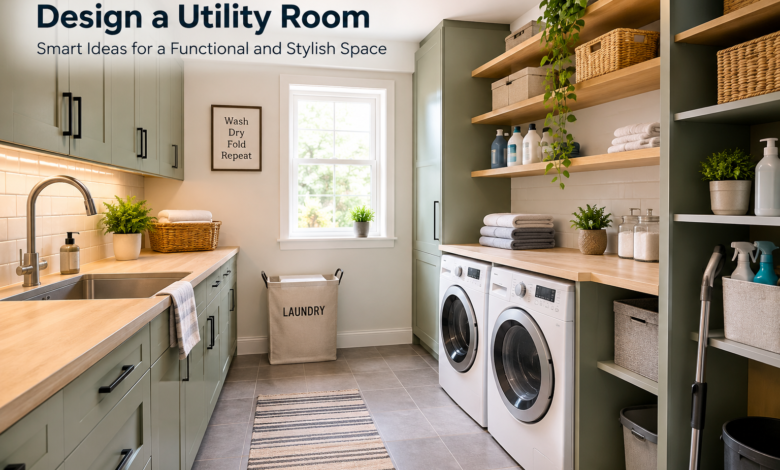
Consider installing wall-mounted shelves, overhead cupboards, pull-out baskets, and tall cabinets. These options help make use of vertical space while keeping the floor relatively clear.
If you design a utility room for a busy family, assign specific storage areas to different household tasks. Keep laundry products near the washing machine and place frequently used cleaning tools in an accessible cupboard.
Closed cabinets create a tidy appearance, while open shelving makes everyday essentials easier to reach. Combining both can provide an effective balance between convenience and visual appeal.
3. Select Durable and Easy-to-Clean Materials
Utility rooms often experience moisture, detergent spills, and regular foot traffic. Choosing appropriate materials can reduce maintenance and help the room remain in good condition.
Water-resistant flooring, washable wall finishes, and durable worktops are useful options. Porcelain tiles and other suitable hard-wearing surfaces may work well in laundry areas, provided they are installed correctly.
When you design a utility room, consider how each surface will perform under everyday conditions. Worktops should be practical for sorting laundry, folding clothes, or placing household items temporarily.
Also, choose cabinet finishes that are easy to wipe clean. Materials should suit the room’s ventilation and moisture conditions, especially when washing and drying appliances operate regularly.
4. Make the Most of Small Spaces
A utility room does not need to be large to work efficiently. Compact layouts can deliver excellent results when every area has a clear purpose.
Stacking a compatible dryer above a washing machine can free up valuable floor space. Slim storage units, foldable drying racks, and wall-mounted ironing boards can also help reduce clutter.
Another useful approach is to use the space above appliances for shelves or cabinets, provided there is adequate clearance and safe access.
If you design a utility room in a small apartment or under-stairs area, prioritize essential equipment first. Avoid adding furniture that blocks access or makes routine tasks uncomfortable.
5. Improve Lighting and Ventilation
Good lighting makes it easier to sort clothes, read product labels, and identify stains. Ceiling lights provide general illumination, while under-cabinet lighting can brighten work surfaces.
Natural light is helpful when available, but artificial lighting should still be sufficient for evening use. Choose fixtures appropriate for the room’s moisture conditions.
Ventilation is equally important. Dryers should be installed according to manufacturer instructions, and any required exhaust system must be correctly configured. Suitable ventilation can help manage excess humidity and reduce the risk of moisture-related problems.
A comfortable environment makes it easier to design a utility room that remains practical throughout the year.
6. Add a Sink and Functional Worktop
If space and plumbing allow, a utility sink can be valuable for rinsing muddy shoes, washing cleaning cloths, and handling small household tasks.
Choose a sink size that suits your needs rather than automatically selecting the largest available option. A nearby worktop provides space for folding clothes, preparing laundry loads, or organizing supplies.
Before installation, consider plumbing access, splash protection, and sufficient clearance around appliances. These details help ensure the room functions properly without unnecessary complications.
7. Create a Consistent and Attractive Style
Practicality does not mean sacrificing design. Coordinated cabinet colors, simple handles, neat storage containers, and suitable lighting can make the room feel more inviting.
Neutral shades such as white, beige, and soft gray create a clean appearance, while natural wood accents can add warmth. You can also introduce a subtle color through accessories or a feature wall.
When you design a utility room, aim for a style that complements the rest of your home. A consistent color palette helps the space feel intentional rather than like an afterthought.
Conclusion
A successful utility room combines an efficient layout, smart storage, durable materials, suitable lighting, and reliable ventilation. Careful planning can make daily household tasks easier while helping you maintain an organized home.
Whether you have a spacious laundry area or a compact corner, focus on your actual needs before choosing appliances and accessories. By making thoughtful decisions about space and functionality, you can create a utility room that is practical, attractive, and easy to maintain for years to come.