
Introduction
A well-organized bedroom creates a comfortable environment where everything has its place. One of the most important elements in achieving this balance is a thoughtfully planned wardrobe. The right interior wardrobe design can improve storage, complement bedroom décor, and make everyday routines more convenient.
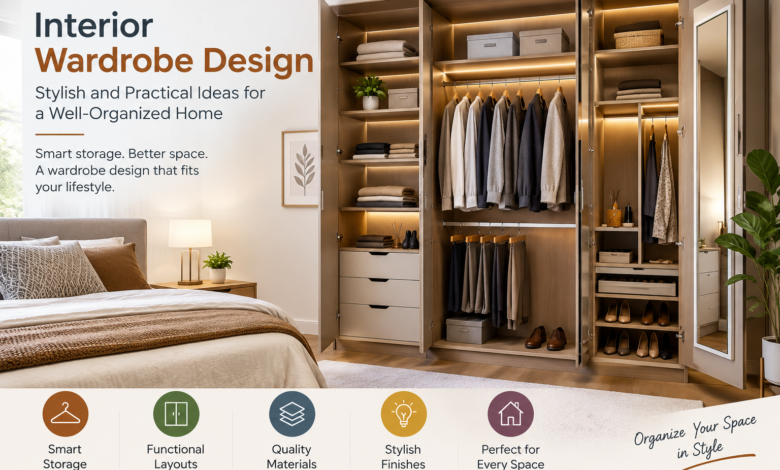
Modern wardrobes are no longer limited to simple cupboards for hanging clothes. They can include adjustable shelves, drawers, shoe racks, accessory organizers, mirrors, and dedicated sections for different clothing items. Whether you have a compact bedroom or a spacious master suite, choosing the right layout can help you use every available inch effectively.
Why Wardrobe Interior Planning Matters
Good wardrobe planning begins with understanding your storage needs. Some people require more hanging space for formal clothing, while others need additional shelves for folded garments, handbags, and accessories.
A practical interior wardrobe design should reflect your lifestyle, available room dimensions, and personal preferences. Before selecting materials or finishes, consider the types of belongings you need to store and how frequently you use them.
For example, everyday clothing should be easy to reach, while seasonal items can be placed on higher shelves. Separating different categories of belongings also reduces clutter and makes it easier to maintain an organized bedroom.
Popular Wardrobe Interior Layouts
Different layouts offer different advantages depending on the room size and storage requirements.
1. Shelves and Drawers
Shelves provide convenient storage for folded clothes, towels, and handbags. Drawers are particularly useful for smaller items such as socks, undergarments, belts, and accessories.
A balanced wardrobe layout combines open shelving with drawers of different depths. This arrangement keeps frequently used items accessible while making the most of the available space.
2. Hanging Sections
Hanging rails are essential for shirts, dresses, jackets, and trousers that need to remain wrinkle-free. Consider installing two hanging rails at different heights if you have many shorter garments.
Longer clothing requires a separate section with sufficient vertical clearance. A carefully measured interior wardrobe design ensures that hanging space is practical rather than unnecessarily crowded.
3. Walk-In Wardrobes
Walk-in wardrobes are popular in larger bedrooms because they can accommodate multiple storage zones. Depending on the available space, they may include full-height cabinets, open shelves, drawers, mirrors, and dedicated shoe storage.
However, a walk-in wardrobe is not essential for an organized bedroom. A well-planned built-in cupboard can provide excellent functionality in a smaller home.
4. Sliding-Door Wardrobes
Sliding doors are useful in bedrooms where opening traditional hinged doors would restrict movement. They create a clean appearance and can work particularly well in narrow spaces.
Mirrored sliding doors may also make a room feel brighter and more open. The internal layout should still provide convenient access to clothing and accessories.
Choosing Materials and Finishes
Material selection affects durability, appearance, maintenance, and cost. Common wardrobe materials include plywood, medium-density fibreboard (MDF), particleboard, and solid wood.
The best option depends on your budget, desired finish, and local conditions. In humid environments, moisture-resistant materials and appropriate edge sealing can help reduce damage, although no material is completely maintenance-free.
When planning an interior wardrobe design, consider neutral finishes such as white, beige, grey, or natural wood tones. These shades often complement different bedroom styles and remain visually appealing as décor changes.
Matte surfaces offer a subtle, contemporary look, while glossy finishes can reflect light. Choose finishes that suit the room rather than following trends without considering long-term use.
Smart Storage Ideas for Small Bedrooms
Limited space does not mean sacrificing organization. Several simple strategies can make a compact wardrobe more efficient.
- Use vertical space: Install shelves close to the ceiling for luggage and seasonal belongings.
- Add adjustable shelves: Change shelf heights as your storage requirements evolve.
- Install drawer organizers: Separate smaller items to prevent clutter.
- Include shoe racks: Keep footwear arranged and easy to locate.
- Use internal accessories: Tie holders, belt racks, and pull-out baskets can improve accessibility.
- Choose suitable lighting: Wardrobe lighting can help you locate items, especially in deeper cabinets.
A space-saving interior wardrobe design should prioritize useful storage over decorative features that reduce available room.
Lighting and Mirrors
Lighting is an important detail that can easily be overlooked. LED strips or integrated wardrobe lights can improve visibility inside darker compartments. Motion-activated lighting may also be convenient, provided the electrical installation is safe and appropriate.
Mirrors serve both practical and decorative purposes. A full-length mirror helps when getting dressed, while mirrored doors can visually expand a small bedroom.
For a polished appearance, coordinate the wardrobe lighting with the room’s overall lighting scheme and avoid placing bright lights where they cause uncomfortable glare.
Common Wardrobe Design Mistakes to Avoid
One common mistake is choosing a wardrobe based only on its exterior appearance. Attractive doors cannot compensate for insufficient shelves, poorly positioned hanging rails, or inaccessible corners.
Another problem is ignoring future storage needs. A growing clothing collection or changing household requirements may make a rigid layout less useful over time.
Before finalizing your interior wardrobe design, measure the room carefully, check door and drawer clearances, and establish a realistic budget. Also consider ventilation, hardware quality, ease of cleaning, and professional installation where necessary.
Conclusion
A functional wardrobe combines smart storage, durable materials, and a style that complements the bedroom. By evaluating your belongings, measuring available space, and selecting suitable internal features, you can create a storage solution that supports everyday comfort.
The most effective interior wardrobe design is not necessarily the largest or most expensive option. It is the one that uses available space intelligently, keeps belongings organized, and matches your practical needs for years to come.