
Introduction
The exterior of a home creates its first impression, and even small design details can make a significant difference. Windows, doors, rooflines, and decorative features all contribute to a property’s overall appearance. One popular way to enhance this appearance is by installing exterior shutters, which combine decorative appeal with practical benefits depending on their design and construction.
Available in numerous colors, materials, and styles, these window features can complement traditional cottages, modern houses, farmhouses, and contemporary properties. Whether you are renovating an older home or designing a new one, choosing the right shutters can help create a more balanced and attractive exterior.
What Are Exterior Shutters?
Exterior shutters are panels installed beside or over windows on the outside of a building. Historically, functional shutters could be closed to provide privacy, shade, ventilation, and protection from certain weather conditions. Today, many products are primarily decorative, while others are engineered to perform specific protective functions.
Understanding the difference is important before purchasing. Decorative models are generally fixed beside windows, whereas operational designs include hinges, suitable hardware, and mounting systems that allow them to open and close.
Homeowners should select products according to their property’s architectural style, local climate, and intended purpose. A carefully chosen design can improve a home’s appearance without making the exterior look overcrowded.
Popular Styles to Consider
There are several shutter styles available, each offering a distinctive appearance.
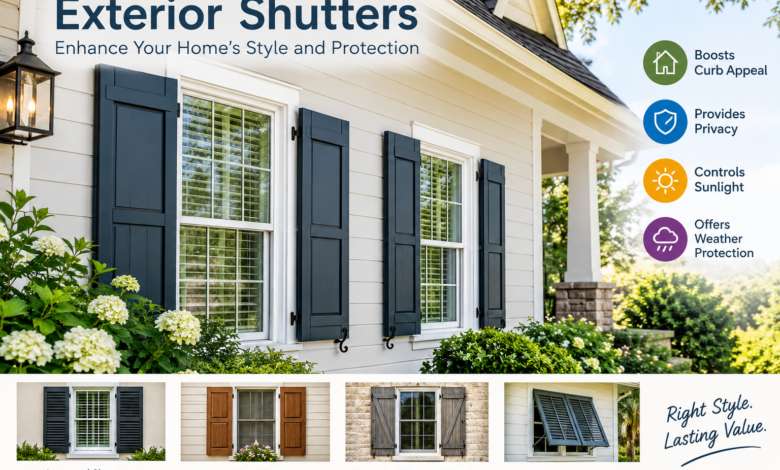
Louvered shutters feature angled slats that create a classic look. They are commonly associated with traditional homes and can add visual texture around windows.
Raised-panel shutters have solid panels with decorative detailing. Their structured appearance works particularly well with colonial, traditional, and formal architectural designs.
Board-and-batten shutters use vertical boards connected by horizontal battens. This rustic design is often suitable for cottages, farmhouses, and country-inspired properties.
Bahama shutters are mounted above windows and can be angled outward. Properly engineered versions may provide shade and weather protection in suitable climates.
When comparing exterior shutters, consider window proportions, surrounding trim, siding colors, and the architectural character of your property. The most attractive option is usually one that complements the existing design rather than competing with it.
Choosing the Right Materials
Material selection affects appearance, maintenance, durability, and cost. Before buying, compare the following common options.
Wood
Wood shutters offer natural texture and a traditional appearance. They can be painted or stained to match the home’s exterior. However, they require appropriate sealing and regular maintenance to help prevent moisture damage, peeling, and deterioration.
Vinyl
Vinyl shutters are lightweight and generally require less maintenance than wood. They are available in various colors and decorative styles. Their quality, color stability, and resistance to temperature changes depend on the product and manufacturing standards.
Composite Materials
Composite shutters combine different materials to achieve particular performance and appearance characteristics. Depending on their construction, they may offer improved resistance to moisture and reduced maintenance requirements.
Aluminum
Aluminum shutters are valued for their strength and relatively low weight. They can be suitable for contemporary properties and certain protective applications, provided the design and hardware meet the project’s requirements.
The best material depends on the local environment, budget, desired appearance, and whether the shutters will be functional or decorative.
Benefits for Homeowners
Installing exterior shutters can offer several advantages when the products are selected and installed correctly.
First, they can improve curb appeal by adding contrast, depth, and architectural character to plain window openings. Coordinating the shutter color with the front door or window trim can create a cohesive appearance.
Second, functional designs may provide privacy and adjustable shade. Depending on their construction, some shutters can also help reduce direct sunlight entering a room.
Third, specifically engineered protective shutters may help defend windows against severe weather or flying debris. Ordinary decorative shutters should not be assumed to provide storm protection.
Finally, suitable materials can offer long-term value through durability and manageable maintenance. However, shutters do not automatically increase property value; the result depends on the quality of installation and the home’s overall condition.
How to Choose the Perfect Size and Color
Correct sizing is essential for a professional appearance. Decorative shutters should generally look proportionate to the windows they accompany. A common design guideline is to choose panels that appear wide enough to cover the window opening if they were closed, although architectural styles and product designs can vary.
Color selection also matters. Dark shutters against light siding create a traditional contrast, while neutral shades can produce a more understated appearance. Bold colors may work well when coordinated with other exterior features.
Before ordering exterior shutters, measure each window carefully and check the manufacturer’s sizing recommendations. Windows on the same property may have different dimensions, so assuming that every opening is identical can lead to purchasing mistakes.
Installation and Maintenance Tips
Proper installation helps ensure that shutters remain secure and visually aligned. Follow the manufacturer’s instructions and use fasteners appropriate for the wall material. For functional or protective models, professional installation may be advisable.
Inspect the shutters periodically for loose hardware, cracks, fading, and moisture damage. Clean them using a method suitable for the material, and repaint or reseal wood products when necessary.
Homeowners considering exterior shutters for storm protection should confirm applicable wind ratings, mounting requirements, and local building regulations before installation.
Conclusion
Exterior shutters can transform a home’s appearance while offering practical benefits when designed for a specific purpose. From traditional wood panels to low-maintenance vinyl and durable aluminum options, homeowners have many choices to suit different architectural styles and budgets.
By comparing materials, selecting appropriate dimensions, coordinating colors, and ensuring proper installation, you can create an attractive exterior that complements your property for years to come.